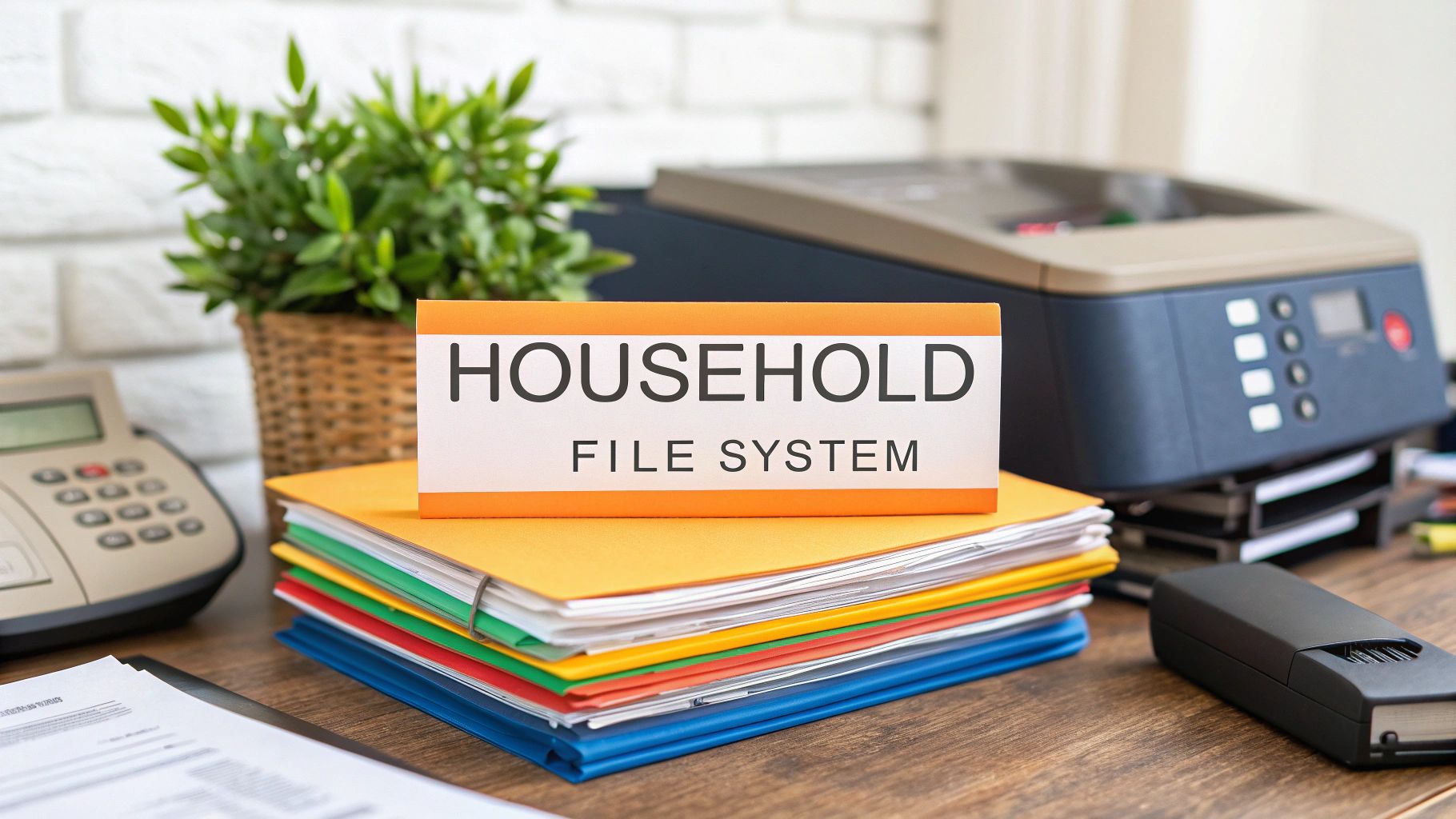
That growing stack of paper isn't just an eyesore; it's a constant source of stress and a huge time-waster. A household file system is your secret weapon for organising important documents, making them easy to grab the moment you need them. Think of it as a command centre for everything from bills and warranties to medical records and tax information.
Finally Conquer Your Paper Clutter
The journey to an organised home almost always starts with tackling the most obvious problem: the endless piles of paper. Utility bills, bank statements, school notices, and junk mail seem to multiply overnight, creating a real sense of chaos. This isn't just a mess; studies have shown that physical clutter directly adds to our stress and anxiety levels.
But the first step isn't about rushing out to buy fancy folders or a new filing cabinet. It’s about taking a hard look at what you’ve got and making some firm decisions. To kickstart your journey to a clutter-free home, have a look at these practical home filing system ideas for a bit of inspiration on what kind of setup will work for you.
The Great Paper Round-Up
Your first mission, should you choose to accept it, is to gather every single piece of paper from all corners of your home. Check the kitchen counter, scour the study, rummage through drawers, and tackle any other "doom piles" where documents go to be forgotten. For now, don't even think about sorting—just collect everything in one central spot, like the dining room table or a big, clear space on the floor.
Seeing it all in one place can feel a bit overwhelming, but trust me, it’s a vital step. It gives you a true sense of scale and stops those stray papers from reappearing later and sabotaging your brand-new system.
Your First Sort into Three Piles
Now, it's time for a quick initial triage. This isn't the final, detailed organisation; it's a rapid-fire sort designed to build momentum. Grab three boxes or just clear three distinct areas and label them:
- Action: This pile is for anything that needs you to do something soon. Think unpaid bills, forms that need signing, or invitations that need an RSVP. These are your immediate priorities.
- Archive: These are the documents you have to keep for reference but don't need to act on right now. This includes things like paid bills, tax documents, property deeds, insurance policies, and even sentimental items like certificates.
- Shred: This is the satisfying pile. It’s for anything outdated or loaded with sensitive information you no longer need. Old credit card offers, expired statements, and most junk mail belong here.
This initial three-pile method is the key to breaking the cycle of procrastination. By focusing on simple, decisive actions, you avoid getting bogged down in the details and create a clear path forward for building your lasting household file system.
Designing Your Personal Filing Blueprint
Now that you've conquered the initial paper mountain, the fun part begins. A truly effective household file system isn't some generic template you download online; it's a personalised blueprint built around the unique rhythm of your life. The goal is to create a structure so intuitive that you—or anyone else in your home—can find a specific document in under a minute.
Forget the rigid A-Z structure if it just doesn't click with you. The best systems are the ones that mirror how you actually think. For most of us, organising by major life categories is far more logical and practical.
This visual guide breaks down that first sorting process, which is the foundation for designing your own bespoke system.
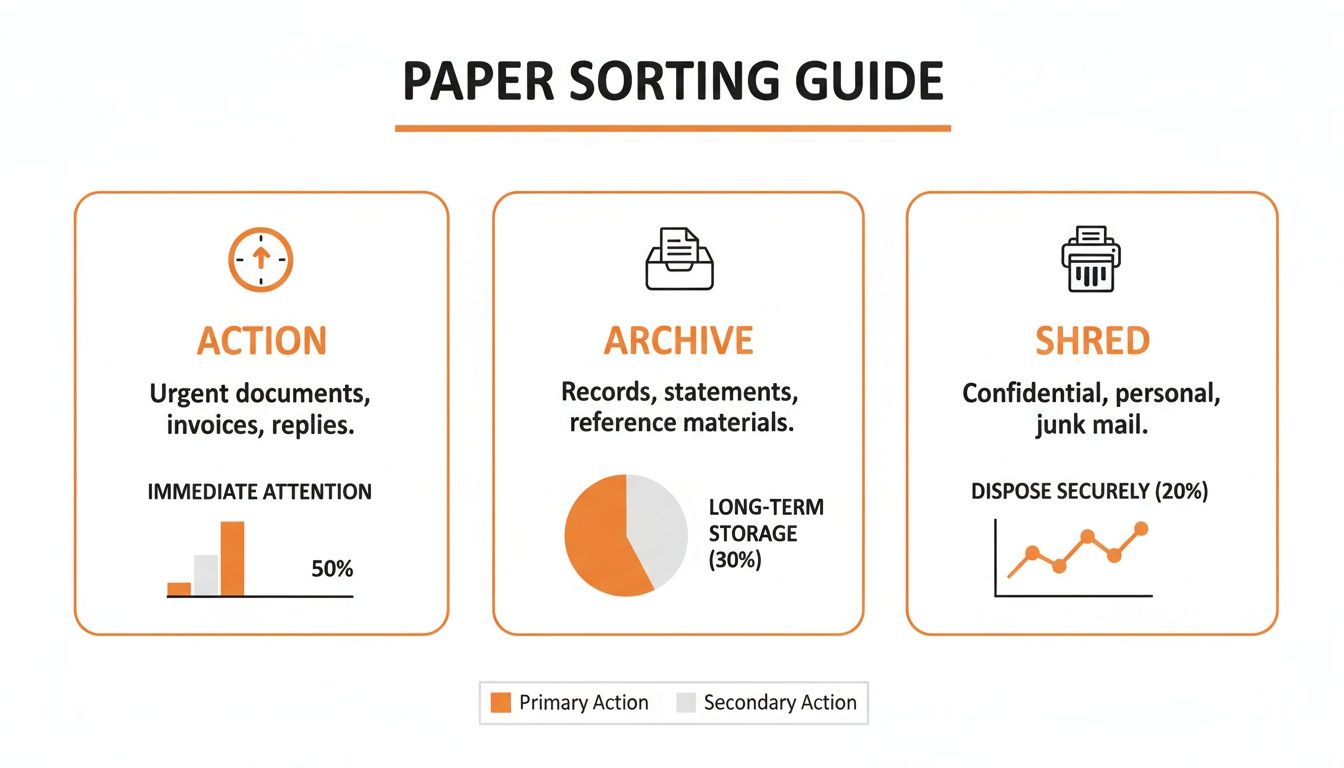
This simple triage into Action, Archive, and Shred piles clarifies what you need to keep. It lets you design categories based on the documents you actually have, not just guesswork.
Structuring Your Categories for Real Life
Think about the main areas of your responsibilities. A busy family with school-aged children will have completely different needs than a freelancer or a retiree. The key is to create broad "parent" categories that make sense at a glance.
Here are a few real-world examples to get you started:
- For a Busy Family: Your main categories might be Home & Property, Finances, Medical & Health, and Vehicles. You'd likely want separate folders for each child covering School and Activities, too.
- For a Freelancer: A logical structure could be Personal Finances, Business Finances, Client Projects, Taxes, and Home Records.
- For a Retiree: Categories could include Pensions & Investments, Healthcare & Insurance, Estate Planning, Property Management, and Travel Documents.
Your system’s logic should mirror your life’s logic. If you think of your car insurance as part of your 'Vehicle' expenses, don't file it under 'Insurance'. The best household file system is the one you don't have to think about using.
Blending Physical and Digital Worlds
Deciding what to keep in a filing cabinet versus what to scan and store digitally is a core part of your blueprint. It's not an all-or-nothing choice; a hybrid approach often works best, playing to the strengths of each format.
Some documents, like birth certificates, property deeds, or anything with a raised seal, should always be kept in their original physical form. Keep them somewhere secure and fireproof. On the other hand, digitising everyday papers like utility bills or bank statements can dramatically reduce physical clutter. Scanning apps on modern phones have made this process incredibly fast and simple.
To help you decide which path to take for different documents, let’s weigh up the pros and cons.
Choosing Your Filing Method: Physical vs. Digital
A side-by-side look at physical and digital systems can help you build a hybrid approach that works for you.
| Feature | Physical Filing System | Digital Filing System |
|---|---|---|
| Accessibility | Limited to one location. | Accessible from anywhere with an internet connection. |
| Security | Vulnerable to fire, flood, and theft. | Protected by passwords and encryption but vulnerable to cyber threats. |
| Searchability | Requires manual searching through folders. | Instant search using keywords, dates, or tags. |
| Space | Requires physical space (filing cabinets, boxes). | Takes up no physical space in your home. |
| Best For | Original documents, wills, deeds, certificates. | Everyday bills, receipts, bank statements, reference documents. |
Ultimately, your comfort level with technology and the types of documents you handle most will guide this decision. A good starting point is to keep the irreplaceable originals physically secure and digitise everything else for easy access and a clutter-free home.
Using the Right Tools and Labels
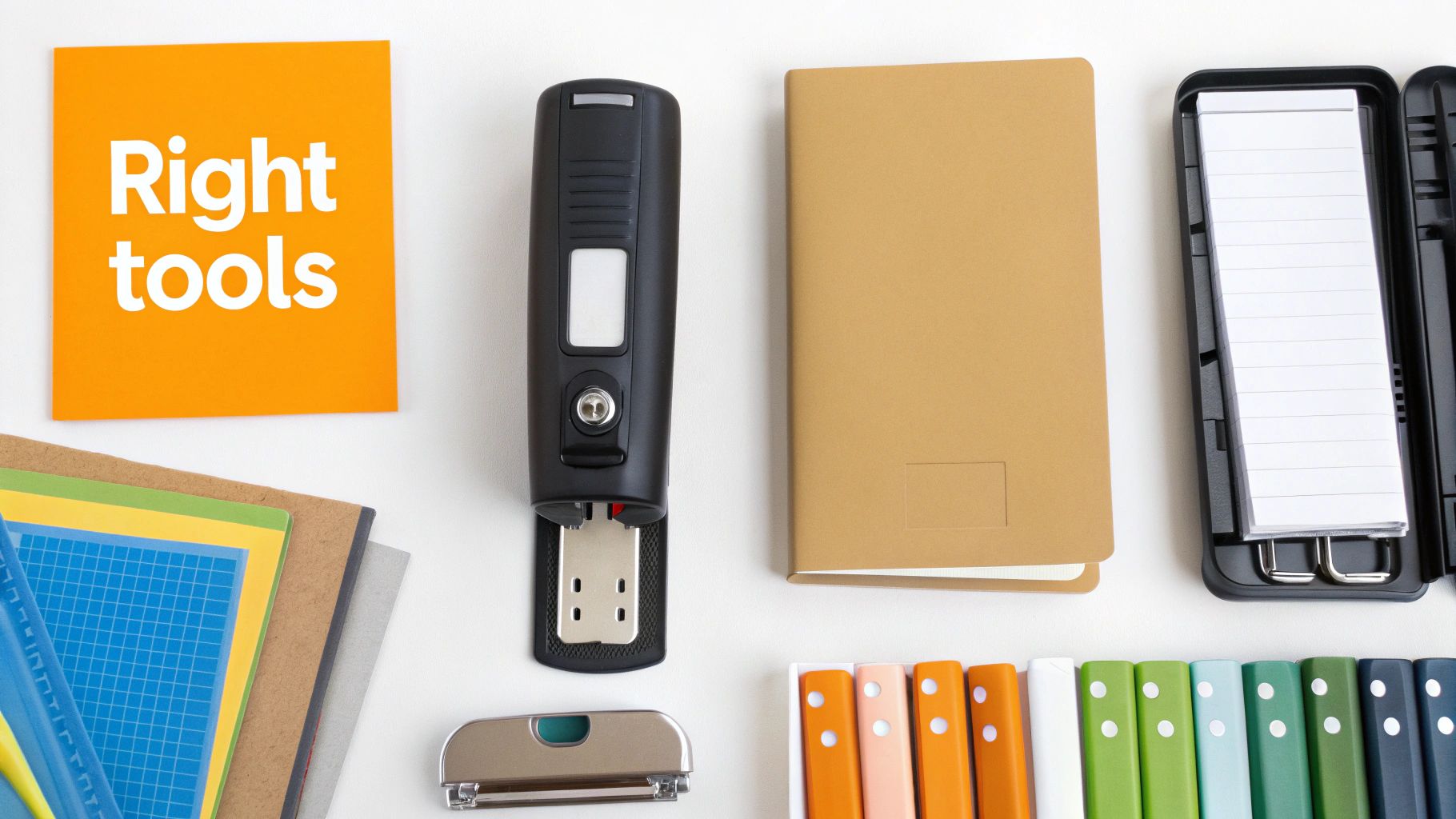
Once you have your blueprint, it's time to gather the supplies that will bring your household file system to life. The right tools don't need to be expensive, but they do need to be functional and consistent. Think of it as setting up a tidy workshop for your documents—the better the setup, the easier it is to keep things in order.
Your foundation will be a sturdy filing cabinet or a set of robust archive boxes. When you pair these with high-quality, durable file folders, you're building a system that will protect your important papers for years to come. I've seen too many people try to save a few quid on flimsy materials, only for them to tear and cause a mess down the line. It's just not worth the frustration.
If you find you're running out of room for long-term archives, our guide on how to use packing boxes effectively has some great solutions for that.
Creating a Labelling System That Works
Clear, consistent labelling is the absolute cornerstone of a filing system you'll actually use. While you can handwrite labels, they often end up messy and hard to read. Honestly, a simple label maker is one of the best investments you can make for this project. It creates clean, uniform labels that make scanning through your files a breeze.
The trick is to establish a clear naming convention and then stick to it religiously. A format that works brilliantly is Category – Subcategory – Year.
- For example:
FINANCE – Car Insurance – 2024 - Or:
HOME – Boiler Service – 2023 - And:
MEDICAL – Dental Records – 2024
This structure automatically groups related documents together, which makes finding what you need incredibly fast.
Pro Tip: Try colour-coding for at-a-glance recognition. Assign a specific colour folder or label to each of your main categories. For instance, you could use green for 'Finances', blue for 'Home', and red for 'Medical'. This simple visual cue makes filing and finding documents almost effortless.
Setting Up Your Processing Station
To stop new paper piles from creeping back in, you need to designate one single spot in your home as a "processing station." This doesn't need to be a grand setup; a simple inbox tray on a shelf works perfectly. The one non-negotiable rule is that all incoming mail and new papers go straight into this tray—nowhere else.
Set aside time once a week to empty it. This is where your digital workflow kicks in. A fast document scanner, or even a good scanning app on your phone, can quickly digitise bills, receipts, and statements you don't need to keep in physical form.
For your digital files, just mirror the physical folder structure in your cloud storage, like Google Drive or Dropbox. Use the exact same naming convention for digital files to keep everything consistent. This hybrid approach gives you the security of physical copies for the really important stuff and the convenience of digital access for everything else. By turning this into a weekly habit, you'll make sure your organised system stays that way for good.
Maintaining and Archiving Your Documents
You’ve done it. You’ve wrestled that mountain of paper into a beautifully organised household filing system. But the real victory isn't just in creating it; it's in keeping it that way. Without a simple maintenance routine, even the most perfect system will slowly slide back into chaos.
The key is building small, consistent habits that stop paper from ever piling up again.
This doesn't mean a huge time commitment. Just set aside 15-20 minutes once a week. I find Sunday evening works well—it’s a great way to reset and prepare for the week ahead. Use this time to process everything in your 'inbox' tray. Pay the bills, sign the forms, and file or scan the rest. This little ritual is your best defence against clutter.
Creating Your Household Document Retention Policy
A huge part of keeping your system lean is knowing when you can finally get rid of old documents. A clear retention policy takes the guesswork and anxiety out of shredding, allowing you to confidently ditch papers that have served their purpose. This is how you keep your active filing cabinet from overflowing.
For UK households, here’s a straightforward guide on how long to keep things:
- Tax Records: If you’re employed, HMRC suggests keeping records for at least 22 months after the end of the tax year. For the self-employed, that stretches to at least 5 years and 10 months.
- Payslips & P60s: Hang onto payslips until you've checked them against your P60 at the end of the tax year. Once everything matches up, you can shred the payslips, but keep the P60s for a good few years.
- Utility Bills & Bank Statements: A year is generally long enough for these, unless you need them for your tax return. Besides, most providers offer online access to historical statements these days.
- "Forever" Documents: Some papers are for life. Think birth certificates, marriage certificates, property deeds, and wills. These need to be stored somewhere secure and fireproof. You can learn more in our dedicated guide to the best document archiving practices.
As you start to digitise more of your life, it's worth looking into the Benefits And Drawbacks Of Creating An Online Will And Trust, as this will shape how and where you store such vital information.
Transitioning From Active Files to Long-Term Archives
As the years tick by, your 'Archive' section is bound to grow. Those folders with car insurance details from five years ago or warranties for appliances you no longer own don’t need to clog up your main filing cabinet. This is where moving things to a secondary storage space becomes so important for an efficient household file system.
Once a year, set aside time for a "deep archive." Go through your files and pull out anything that's past its retention date or is no longer relevant. These documents can be moved from your everyday cabinet into clearly labelled archive boxes.
By moving older, rarely accessed documents to a secondary location, you keep your everyday filing system lean, fast, and focused only on what's currently relevant. This makes finding what you need a much quicker and less frustrating task.
This is where external storage solutions really shine. With UK homes getting smaller, it’s no surprise that the self-storage industry is booming. A secure self-storage unit is the perfect home for these long-term archives, keeping them safe from damage while freeing up precious space at home.
When to Use Self Storage for Household Files
So, your home filing system is finally organised and handling the daily flood of paperwork like a charm. But what about the documents that need more space, more security, or simply need to be kept for years on end? For those bulky archives, sensitive records, or papers you rarely touch but absolutely cannot throw away, a self storage unit is the perfect extension of your home office.
Think about it in real-world terms. If you run a business from home, you could have seven years of tax records and invoices eating up an entire cupboard. A major renovation might leave you with architectural plans and contracts that are vulnerable to damage. Or maybe you're the family historian, safeguarding decades of photos, letters, and certificates that deserve better protection than a dusty attic can offer.
The Ideal Environment for Long-Term Archives
This is where a dedicated storage facility really shines. Modern units, particularly climate-controlled ones, are designed to preserve paper by maintaining a consistent temperature and humidity. This is the secret to preventing the yellowing, brittleness, and mould that can completely destroy old documents and photos over time.
Throw in features like 24/7 CCTV monitoring and secure, controlled access, and you’ve got a level of protection that’s incredibly difficult to match at home.
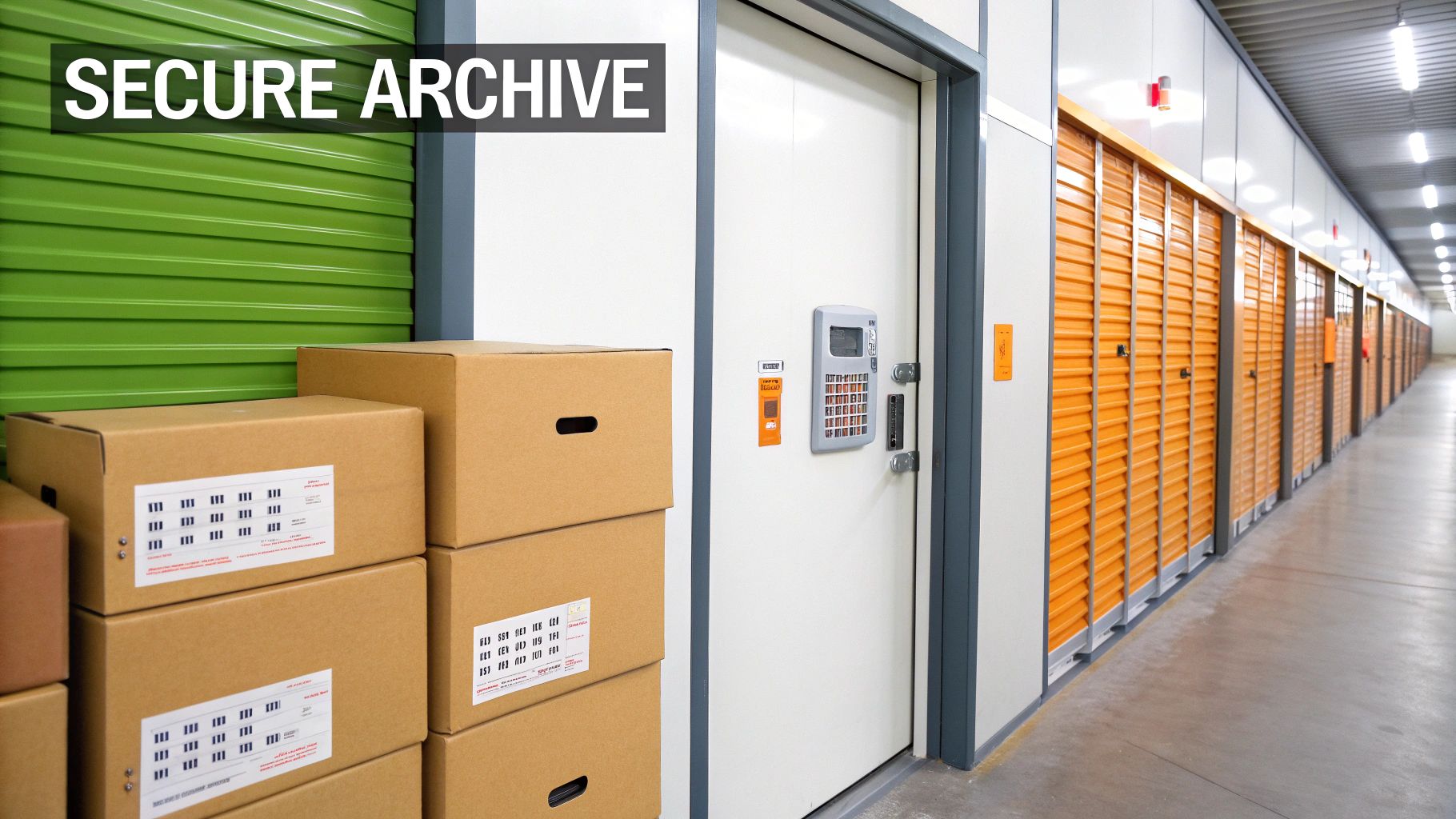
Self storage is a cost-effective way to gain both physical space and peace of mind. By moving non-essential archives off-site, you free up valuable room at home while ensuring your most important documents are shielded from unforeseen damage or loss.
A Secure and Flexible Solution
The UK self storage industry is increasingly geared towards these exact needs. In fact, 24% of self-storage users run businesses from their units, often using them specifically for document archiving. High occupancy rates and the widespread adoption of technology, with 90% of providers now offering online booking, have made securing a space easier than ever.
This trend proves that off-site storage is a trusted, mainstream solution for extending a household filing system. It means you can confidently explore secure document storage options that offer both flexibility and top-tier security.
Ultimately, it’s about having a place to safely store everything from old business ledgers to sensitive legal papers like wills and property deeds without cluttering up your living space. It’s the final piece of the puzzle for a truly comprehensive household management strategy, ensuring your archives are safe for years to come.
Got Questions About Your Home Filing System?
Even with the best system in place, a few questions are bound to pop up. As you get comfortable with your new setup, you'll naturally find little things that need a tweak here and there. Let's tackle some of the most common queries to help you keep your files in order for years to come.
How Long Should I Keep Different Documents in the UK?
Knowing what to keep and for how long is the secret to preventing your filing cabinet from overflowing. In the UK, retention rules can vary quite a bit depending on what you're filing.
For anything tax-related, HMRC says to hold onto records for at least 22 months after the tax year they relate to. But if you're self-employed, that timeline stretches to at least 5 years and 10 months. Most utility bills and bank statements can be shredded after a year, unless you need them for your tax return.
Then there are the documents you keep for life.
- Property Deeds & Wills: These are forever documents. Keep them somewhere incredibly safe and fireproof.
- Birth & Marriage Certificates: Hold onto the originals indefinitely.
- Life Insurance Policies: These should be kept for the entire life of the policy.
- Car Ownership Documents (V5C): You only need this as long as you own the car. Once you sell it, the new owner gets it.
What Is the Best Way to Secure Digital Files?
A solid digital filing system is built on two things: logical organisation and strong security. Start by creating a handful of main folders that mirror your physical categories, like 'Finance', 'Home', and 'Medical'. A consistent naming convention, something like YYYY-MM-DD_Document-Type, makes finding things later an absolute breeze.
When it comes to security, use a reputable cloud storage service and, whatever you do, enable two-factor authentication (2FA). This one step is probably the single most powerful thing you can do to protect your files from unwanted access. For super-sensitive files, like digital copies of passports or legal documents, you might want to use extra encryption software for another layer of peace of mind.
A huge part of digital security isn’t just keeping people out; it's about making sure you don't lose anything. Back up your entire digital archive regularly. A combination of a second cloud service and an external hard drive is a great way to build in redundancy.
How Do I Make My New Filing System Stick?
The real secret to making any system last is to build simple, repeatable habits. If your process is too complicated—say, it takes five different steps just to file one bill—you're just not going to do it. The key is to make it almost effortless.
First, set up a single "inbox" tray where all new papers go. Then, commit to clearing it out for just 15 minutes each week. This simple ritual stops new piles from ever taking root.
Next, get everyone else in the house on board. A shared system is so much easier to maintain when everyone knows the basic rules and where things are supposed to go.
Finally, don't be afraid to move older files into deep storage. Shifting documents you rarely need into archive boxes and putting them in a secure off-site location keeps your day-to-day filing system lean, accessible, and much less intimidating to use.
When your archives outgrow your filing cabinet, Standby Self Storage offers a secure, flexible, and convenient home for your long-term document storage. Book your unit online today and give your household files the organised space they deserve.