Think of your home insurance policy as a protective bubble drawn neatly around your house. The moment your belongings are packed up and moved into a self-storage unit, they've stepped outside that bubble. They need a new one.
Why You Need Contents Insurance for Storage
This is exactly where contents insurance for storage comes in. It's a specific type of policy created to cover your goods against risks like theft, fire, or water damage while they’re kept away from your property.
Unlike a standard home policy, which often has tight limits or outright exclusions for items stored elsewhere, this insurance is built from the ground up for the self-storage environment. It’s not just an optional extra; it's a fundamental layer of financial protection for everything you value.
A Non-Negotiable Safeguard
The UK self-storage industry is a massive market, worth around £1.08 billion a year across more than 2,200 facilities. To manage the risks involved, nearly every UK provider makes contents insurance a mandatory part of the rental agreement. This isn't an upsell—it's a sensible requirement to protect you and the facility from events that home insurance simply won't cover.
This rule ensures there’s a clear and straightforward process for compensation if something unexpected happens, giving you proper peace of mind from the moment you lock your unit.
Think of it this way: The storage facility provides the secure physical space, but the insurance provides the financial security. One protects your items from being taken or damaged, while the other protects their monetary value.
Understanding this difference is the first step. For more foundational knowledge, our self-storage facility basics guide covers everything you should know before you even start packing.
The table below sums up why getting the right cover is an essential part of renting a unit.
Why Contents Insurance for Storage Is Essential
| Reason | Explanation |
|---|---|
| Mitigates Financial Loss | Replaces or repairs your items if they are damaged or stolen, preventing a significant and stressful out-of-pocket expense. |
| Covers Specific Risks | Policies are designed for storage-specific threats like fire, theft, flood, and vandalism that home policies may not cover off-site. |
| Provides Peace of Mind | Knowing your belongings are financially protected allows you to store them with confidence, whether for a month or for years. |
| Fulfills Rental Requirements | Most facilities, including Standby Self Storage, require proof of insurance before you can move in, making it a mandatory step. |
Ultimately, arranging the right insurance isn't just a box to tick—it's about making sure your stored possessions are properly protected, no matter what.
What Your Storage Insurance Policy Actually Covers
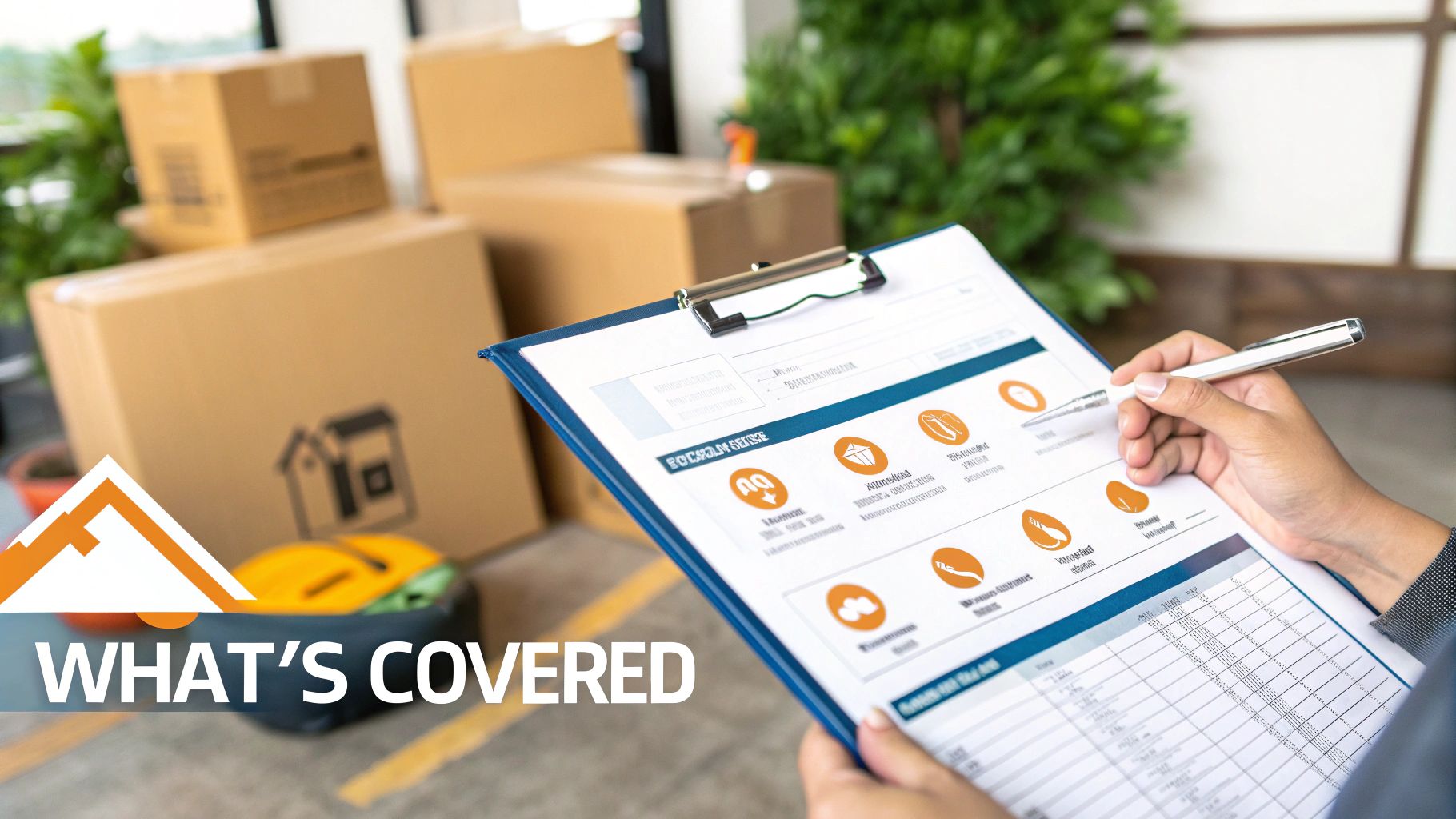
Let's be honest, opening an insurance policy can feel like trying to read a foreign language. The wording is dense, the terms are specific, and it’s easy to get lost in the small print. But when it comes to contents insurance for storage, knowing what you’re actually protected against is the key to genuine peace of mind.
Think of it this way: your policy is a list of promises. It promises to cover your financial losses if specific events, known in the industry as named perils, happen. These are the clearly defined situations where your insurer agrees to step in and help.
While every policy has its own unique details, most are built to protect you from the most common and serious risks that come with storing your belongings away from home.
Standard Coverage: What to Expect
Most policies will give you a solid safety net against major, unexpected disasters. The core of your protection will usually cover damage or loss from a few key scenarios.
Here’s a breakdown of what’s typically included:
- Fire: This covers damage from a fire at the storage facility, whether it started in your unit or somewhere else on the site.
- Theft Following Forcible Entry: This is a really important detail. Your policy covers theft, but only if there’s clear proof of a break-in, like a busted lock or a damaged door.
- Flooding and Water Damage: This generally covers damage from things like a burst pipe inside the facility or water getting in due to extreme weather.
- Vandalism: If someone breaks into your unit and deliberately damages your things, your policy should cover it.
- Certain Natural Disasters: Protection from events like lightning strikes or explosions is also a standard feature in many UK policies.
To see how this works in the real world, imagine a pipe bursts in the unit above yours, soaking your antique wooden furniture. A good storage insurance policy would cover the repair or replacement costs. In the same way, if a thief cuts your lock and makes off with your electronics, you’d be able to make a claim.
A policy is essentially a rulebook for reimbursement. The inclusions define the scenarios where you can claim, while the exclusions outline the situations where you cannot. Understanding both sides is the key to managing your risk effectively.
At Standby Self Storage, we offer a clear protection plan through our insurance partners. You can learn more about our StoreProtect scheme, which is designed to give our customers straightforward and reliable cover.
Common Exclusions: What Is Not Covered
Knowing what isn’t covered is just as crucial as knowing what is. Exclusions aren’t there to trick you; they’re necessary limits that help keep policies affordable. If you ignore them, you could face a rejected claim right when you need help the most.
You’ll find that nearly every policy will exclude damage or loss from these situations:
- Mould, Mildew, and Damp: Damage that builds up slowly because of the atmosphere or because items weren't packed properly is almost never covered.
- Pest Infestation: Loss caused by moths, vermin, or other pests is typically excluded, as it’s often seen as a maintenance issue.
- Mysterious Disappearance: If something vanishes from your unit but there’s no sign of a break-in, it won’t be covered. Policies need proof of forced entry for theft claims.
- Wear and Tear: Items that naturally degrade over time aren't covered. Insurance is for unexpected events, not the inevitable effects of ageing.
- Prohibited Items: If you store flammable liquids, perishable foods, or illegal items, your cover will be void for any damage they cause.
- High-Value Items Above the Single Item Limit: Most policies have a cap on how much they’ll pay for any one item (for example, £500). If you have valuable art, jewellery, or antiques, you’ll likely need specialist insurance.
For example, if you find your stored books have grown mouldy after a damp winter, your policy isn’t likely to pay out. Similarly, if you just can’t find a box of valuables but your lock is untouched, you won’t be able to claim for theft. Knowing these boundaries helps you pack and store your belongings properly to prevent avoidable problems.
Choosing Between Facility and Independent Insurance
When you're sorting out your storage unit, you'll eventually come to the question of insurance. It usually boils down to two main options: signing up for the policy offered right there at the facility, or going out and finding your own from an independent provider.
This isn't just about ticking a box. Your choice has a real impact on how well your belongings are protected, how much you'll pay, and how flexible your cover is. While the in-house option is undeniably quick and easy, an independent policy often gives you more comprehensive protection. The right decision really depends on what you value most—convenience or control.
Each path has its own pros and cons, so let's break them down to help you figure out what works best for you, the value of your items, and your budget.
The Facility Insurance Option
Opting for the insurance offered by the storage facility is, without a doubt, the path of least resistance. The paperwork is usually bundled with your rental agreement, meaning you can get everything sorted and walk away with a fully insured unit in just a few minutes. It's the ultimate convenience.
But that simplicity can have its downsides. Facility-provided plans are often a bit of a "one-size-fits-all" solution. They might come with lower cover limits and a narrower list of what they'll actually pay out for, which could leave you underinsured if you're storing high-value goods or items needing special protection.
You might also find the premiums are a little steeper than what you'd find elsewhere. Essentially, you're paying a premium for the convenience of a quick, hassle-free setup. For many people, especially those storing lower-value items for a short time, that’s a trade-off they’re happy to make.
The Independent Insurance Policy
Putting in a bit of legwork to find an independent policy can really pay off. Specialist insurance providers tend to offer much more comprehensive cover with higher limits, giving you proper protection for your valuables.
These policies are also far more flexible, letting you shape the cover to fit exactly what you need. If you're storing antiques, a collection of electronics, or business stock, an independent insurer is much more likely to have the specialised protection you're looking for. And by shopping around, you can often find a much more competitive price, saving you a decent amount of money in the long run.
Think of it like this: facility insurance is the ready-meal of the insurance world—quick, easy, and gets the job done. An independent policy is like cooking from scratch—it takes more preparation, but you control the ingredients and the final result is often far superior.
This approach puts you in the driver's seat, making sure your contents insurance for storage is perfectly matched to the value of what you're protecting.
New for Old vs Indemnity Cover
One of the most important details to check is how a policy pays out if you need to make a claim. It nearly always falls into one of two camps.
- New for Old Cover: This is what you really want. If your five-year-old laptop is stolen, a 'new for old' policy gives you enough cash to go out and buy a brand new, equivalent model today. It doesn’t deduct anything for wear and tear.
- Indemnity Cover (Actual Cash Value): This type of cover only pays out what your item was worth at the moment it was lost. That same five-year-old laptop would be valued much lower because of its age, so your payout would be significantly less than what you’d need to replace it.
Always ask which type of cover a policy offers. 'New for old' gives you far greater peace of mind and is almost always the better choice, ensuring you can actually replace what you've lost without having to dip into your own pocket.
To make things clearer, let's put the two main insurance options side-by-side.
Facility Insurance vs Independent Policy: A Head-to-Head Comparison
| Feature | Storage Facility Insurance | Independent Insurance Policy |
|---|---|---|
| Convenience | Excellent. Set up instantly at the time of rental. | Requires research and a separate application process. |
| Cost | Often higher premiums for the level of cover provided. | Generally more competitive, with potential for lower premiums. |
| Coverage | Tends to be basic with lower limits and more exclusions. | More comprehensive, with higher limits and tailored options. |
| Flexibility | Limited. Often a fixed-tier system based on value. | Highly flexible, with options to add cover for specific items. |
| Payout Type | May be 'indemnity' based. You must check the fine print. | More likely to offer superior 'new for old' cover. |
As you can see, taking a little extra time to explore an independent policy can give you better cover, more flexibility, and potentially save you money. It puts you in control, ensuring your stored items have the protection they deserve.
How to Value Your Stored Belongings Accurately
Getting your valuation right is the single most critical step when you’re arranging contents insurance for storage. It’s tempting to pluck a figure out of thin air or just use the price you originally paid, but that’s one of the easiest and most costly mistakes you can make. Do that, and you could leave a massive gap between what your stuff is actually worth and what your insurer will pay out.
Think of your sum insured as a bridge. If you underestimate the weight it needs to hold, the whole thing could collapse when you need it most. A precise valuation means that if the worst happens, you’ll have the funds to replace everything you’ve lost. No nasty surprises.
And the value of our possessions adds up faster than you’d think. Recent data shows the average value of items in a UK household is now around £58,210—that’s a jump of nearly 38% since 2019. This is partly down to all the high-value tech we own these days, which makes getting that valuation spot-on more important than ever.
From Big Tickets to Small Collections
First things first: you need a proper inventory. Go through your home, room by room or even box by box, and list everything you’re planning to put into storage. It’s easy to focus on the big-ticket items like your sofa, telly, or washing machine, but all the smaller things add up incredibly fast.
Don't forget about collections that have a significant value when grouped together.
- Clothing and Shoes: A full wardrobe can easily cost thousands of pounds to replace from scratch.
- Books and Media: That collection of vinyl records, books, or DVDs could have a surprisingly high replacement cost.
- Kitchenware: Pots, pans, cutlery, and all those small appliances accumulate in value quickly.
- Tools and Hobby Equipment: Specialist tools, whether for work or a hobby, can be seriously expensive to buy again.
If you have items with unique or specialist value, like antiques, it’s a good idea to get a professional opinion. Learning how to find the value of antiques using expert methods is a great way to ensure you’re not undervaluing your most precious items.
The Golden Rule: New for Old Replacement Cost
Once you have your inventory, it's time to work out the 'new for old' replacement cost. This is the most important concept to grasp. It means you need to figure out what it would cost to buy every single item brand new today—not what you paid for it five years ago, or what it’s worth second-hand.
Your five-year-old sofa might only fetch £100 on Facebook Marketplace, but a brand-new equivalent could set you back £1,000. Your insurance needs to cover the £1,000 figure. Valuing your goods based on used prices is a fast track to being underinsured.
This step involves a bit of online research. Look up your electronics, furniture, and appliances to find their current market price. For everything else, make a sensible estimate of what it would cost to replace new. When in doubt, it’s always better to slightly overestimate than underestimate.
This simple infographic shows how getting the valuation right is the crucial first step before you even think about getting quotes.
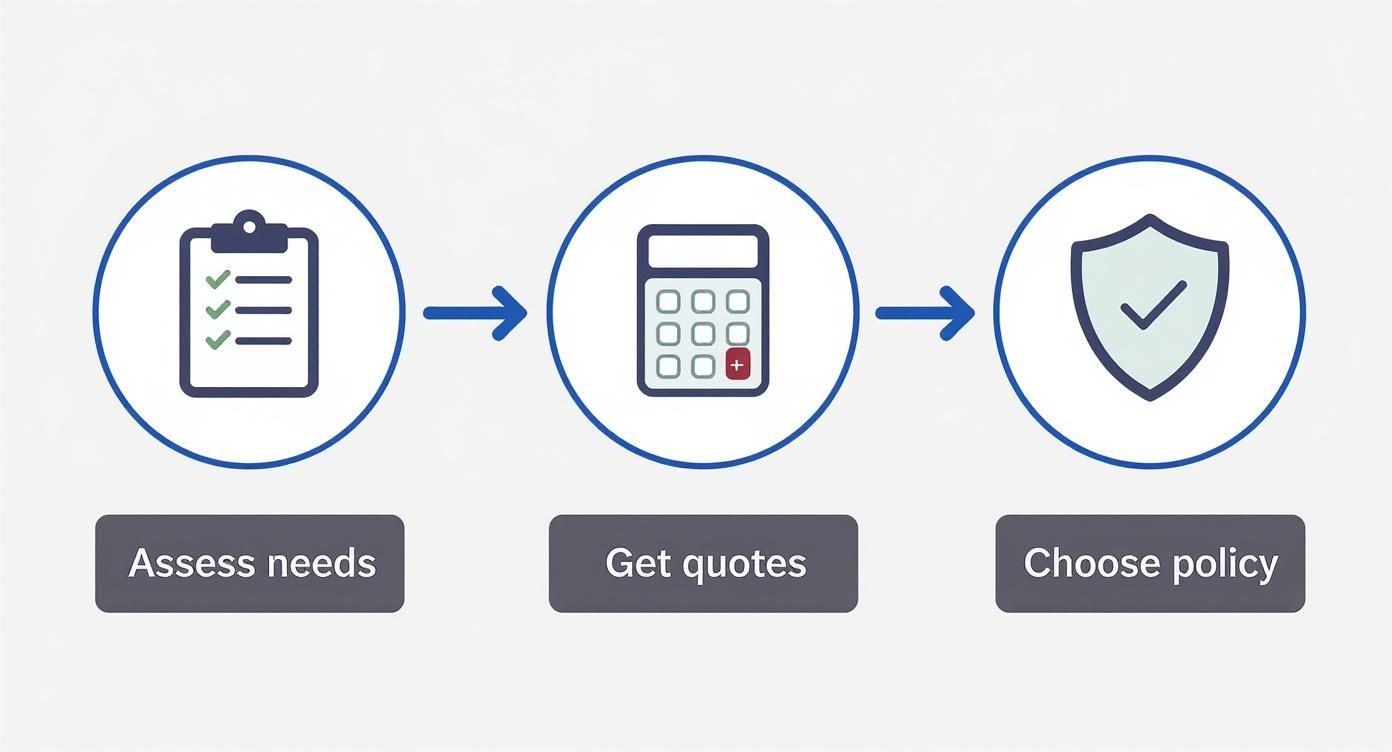
As you can see, assessing your needs—which starts with an accurate valuation—is the foundation for choosing a policy that actually protects you.
The Danger of the Average Clause
So, what happens if you get it wrong? Insurers have a way of protecting themselves from people who deliberately underinsure their items to get a cheaper premium. It’s called the 'average clause', and it can slash your payout when you need it most.
Basically, if you insure your belongings for only 50% of their true replacement value, the insurer might only pay out 50% of any claim you make, even if it’s for a partial loss.
- Example: Your stored items are worth £10,000.
- You decide to insure them for £5,000 (that’s 50% of their real value).
- A fire causes £4,000 worth of damage.
- Because you were underinsured by 50%, the insurer could apply the average clause and pay only 50% of your claim. That would leave you with just £2,000, and a painful £2,000 shortfall to cover yourself.
Taking the time to value your goods accurately is the only way to avoid this trap and make sure your financial safety net is truly secure.
Key Questions to Ask Before You Buy Insurance
Before you commit to any insurance policy, it’s time to put on your investigator hat. Asking the right questions now can uncover hidden risks, expose annoying loopholes in a policy, and help you sort the great providers from the merely average ones. A bit of digging today can save you a world of financial headaches later on.
The aim is to get the full picture, which means you’ll need to chat with both the storage facility and the insurance provider. Think of it this way: the facility's security is your first line of defence, while the insurance policy is your financial safety net. You need to feel confident in both.
Questions for Your Storage Facility
A properly secured facility massively drops the odds of you ever needing to make a claim in the first place. At Standby Self Storage, we’re proud of our security measures, but you should always check the specifics at any site you’re considering. A good facility will be more than happy to walk you through these details.
- What kind of access controls are in place? Find out if they use electronic keypads with individual PIN codes or just a simple key. PIN-coded entry is far superior because it creates a digital log of everyone who comes and goes.
- Is the CCTV system monitored 24/7? There’s a big difference between cameras that are actively watched and ones that just record footage. Monitored systems mean a much faster response if anything suspicious happens.
- What’s the site’s perimeter security like? Look for the basics: sturdy perimeter fencing, controlled gate access, and decent lighting. These are simple but powerful deterrents against anyone trying to get in who shouldn’t be.
- How do you handle fire prevention and detection? Check for smoke detectors, fire alarms, and extinguishers. Understanding their fire safety protocol is crucial for protecting your belongings.
By asking these targeted questions, you’ll get a real feel for how seriously a facility takes security. This isn't just about protecting your stuff; it's about partnering with a provider that actively works to stop things from going wrong.
Peace of mind doesn’t come from a policy alone. It comes from knowing your belongings are stored in a secure, well-managed environment where risks are actively minimised.
Questions for Your Insurance Provider
Once you’re happy with the physical security, it’s time to focus on the policy itself. The answers you get here will tell you everything you need to know about the quality of your financial protection. Don't be shy about getting into the nitty-gritty.
- What is the policy excess? This is the amount you have to pay out of pocket before the insurance company steps in. A lower excess is usually better, but it can mean a higher premium. It's all about finding a balance you're comfortable with.
- What is the single-item value limit? Most policies put a cap on the payout for any single item, which is often around £500. If you’re storing anything more valuable—like artwork, jewellery, or high-end electronics—you absolutely must declare it. You might even need specialist cover.
- Is the cover 'new for old' or 'indemnity'? This is a critical one. 'New for old' cover gives you the money to buy a brand-new replacement for a damaged item. 'Indemnity' cover, on the other hand, only pays out the item's depreciated, second-hand value. Always, always aim for 'new for old'.
- What is the exact process for making a claim? Ask who to contact, what documents they'll need (like photos or receipts), and what their typical claim-processing time is. A clear, straightforward process is usually the sign of a provider that has its act together.
Asking these questions upfront puts you in control, allowing you to choose a policy that offers genuine, reliable protection. It ensures the contents insurance for storage you pay for is the protection you’ll actually get if the unexpected happens.
Common Mistakes That Can Invalidate Your Claim
Taking out contents insurance for your storage unit is a smart move, but just having a policy doesn’t guarantee you’ll get a payout. A few common—and often unintentional—blunders can leave your claim denied right when you need that protection the most. Knowing what these pitfalls are is the first step to making sure your financial safety net is actually there for you.
One of the biggest tripwires is assuming your standard home insurance has you covered. This is a particularly risky gamble for renters. In fact, a recent UK analysis found that the number of renters with contents insurance dropped from 51% in 2021 to just 46% in 2023, often because of cost worries. This trend means many people using storage are dangerously exposed, facing a total loss with no financial backstop if they haven’t arranged specialist cover.
Improper Packing and Prohibited Items
Believe it or not, how you pack your belongings directly affects your insurance coverage. Most policies will flat-out refuse to cover damage from mould, mildew, or damp if it’s caused by poor packing. Storing things without thinking about ventilation or moisture protection is a classic recipe for gradual damage—and a rejected claim.
For example, if you seal a box of books in a plastic container without throwing in a few moisture-absorbing silica gel packs, you might come back to a mouldy mess that your policy won’t touch. For some expert tips, check out our guide on how to pack your storage unit the right way to head off these kinds of problems.
Even worse is storing prohibited items. This is a surefire way to void your entire policy. Things like flammable liquids, gas canisters, paint, or perishable food are almost always on the forbidden list. If those items cause a fire or attract pests that damage your other belongings, you can bet your insurance won’t cover a penny of it. Always, always check the facility’s list of prohibited items before you move anything in.
Avoiding a claim denial often comes down to proactive care. By packing thoughtfully and storing responsibly, you uphold your end of the insurance agreement, keeping your coverage valid.
Failing to Update Your Policy
Life changes, and so do the things you store. A classic error is adding a valuable item to your unit and forgetting to tell your insurer. Most policies have a single-item limit, and anything worth more than that needs to be declared and listed separately.
Imagine you pop an expensive piece of art or a high-end gaming PC into your unit. If it gets stolen or damaged and its value is over your policy’s single-item limit, you’ll only be reimbursed up to that cap, leaving you massively out of pocket. The solution is simple: keep your insurer in the loop with an up-to-date inventory. This also means choosing a facility that takes safety seriously; their attention to effective fire prevention tips can make a real difference, as site negligence could complicate claims.
Frequently Asked Questions
When you're looking into contents insurance for storage, a few common questions always seem to pop up. It makes sense—whether you’re a student stashing a few boxes between terms or a business owner protecting valuable stock, you need clear answers. Let's tackle the most frequent queries to help you get the right protection for your belongings.
Do Students Need Insurance for a Few Boxes?
It’s easy to think that if you're only storing a handful of items, insurance is overkill. But take a moment to add up the replacement cost of what’s actually in those boxes. Over a university break, that could include a laptop, pricey textbooks, your entire winter wardrobe, and maybe a TV.
On their own, these items might not seem like a big deal. But if you had to buy everything again from scratch, the bill could easily climb into the thousands. A small, affordable policy is a smart move to protect yourself from a major financial headache if the worst happens. Think of it as a safety net for a minimal monthly cost.
It's a simple but effective test: imagine everything in your unit is gone. Now, calculate what it would cost to replace it all. That total is almost always higher than you’d guess, making a small insurance premium a no-brainer.
Is Business Stock Covered by a Standard Policy?
This is a crucial point for any business owner: a standard personal contents policy for storage will almost never cover commercial goods. Insurers see a clear difference between personal effects (like your sofa and clothes) and business stock (items you sell, tools, or equipment).
If you’re storing inventory, client files, or tools of the trade, you need a specialised business or commercial insurance policy. These are designed to cover the unique risks that come with commercial activities and usually have different terms and higher coverage limits. Always be upfront that you're storing business goods to get the right cover. If you don't, any claim you make is likely to be rejected flat out.
Can I Just Extend My Home Insurance Policy?
It’s tempting to just lean on your existing home insurance, but it's rarely your best bet for items in storage. Most home insurance policies offer very limited 'off-site' or 'goods in storage' cover, and it's often buried in the small print.
These extensions usually come with some serious strings attached:
- Lower Payout Limits: The maximum they'll pay for items stored away from home is often a fraction of your main policy's limit.
- Limited Risks Covered: They might only cover specific events, leaving you exposed to common storage issues like certain types of water damage.
- Strict Time Limits: Some policies will only cover goods in storage for a short period, like 30 or 60 days, which is no good if you need longer-term storage.
Dedicated contents insurance for storage is almost always the better choice. It's built specifically for the storage environment, offers clearer terms, and provides reliable protection without the hidden clauses you find in many home policies.
What Is the Typical Cost of Storage Insurance?
The good news is that proper storage insurance is surprisingly affordable. The cost is based on the total replacement value of the goods you’re protecting. While prices will vary a bit between providers, a good rule of thumb in the UK is around £1.50 to £2.50 per month for every £1,000 of cover you need.
So, if you’ve valued your belongings at £5,000, you can expect to pay a monthly premium somewhere in the region of £7.50 to £12.50. The final price will depend on the insurer, the excess you choose, and any optional add-ons. It's a small monthly outlay for some serious peace of mind.
At Standby Self Storage, we believe storing your belongings should be simple and stress-free. From our secure facilities to straightforward advice, we're here to help you store with confidence. Find your perfect storage unit online today.